Friday, July 17, 2020

Honors Summer Read 2020: Rules of Engagement

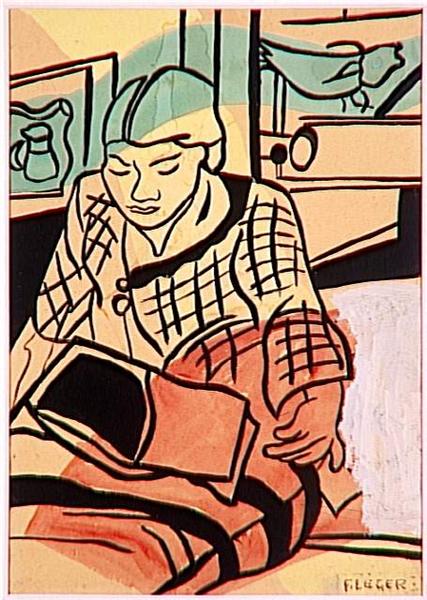
Reading, 1948 - Fernand Leger
"Reading" (1948) by Fernand Leger
Welcome to the ECU Honors Program's Enduring Questions website!

If you are enrolled in an Enduring Questions class for the fall semester of 2020 at ECU (EQ1 or EQ3), this website is for you. Read on!

Responses to questions on this website are designed to generate "virtual conversation." By virtual, we do not mean something that looks like conversation but isn't. Instead, we mean REAL conversation in a virtual environment--this website.  And this fall, incoming first- and second-year Honors students will be engaged in the same discussion. Ten percent of each student's grade in both EQ1 and EQ3 will be based on your responses to the questions raised here.

The sort of conversation we're looking for is academic in character. Thus, your responses should consist of clear, concise statements of your ideas crafted in standard English (not text-speak!). They should be long enough to convey your thoughts, but short enough for other readers to read and respond to fairly quickly. In short, you don't want your responses to be so long that you monopolize (or kill) the conversation by going on, and on, and on.....(we all know how irritating that can be!).

Obviously, responses should not use profanity. They should be civil and respectful. People do not always agree. Responses can be critical; however, all communication is expected to be courteous and professional. Contributors' positions may be questioned; their character should not.

The object here is to reflect on some of the issues raised by the text, to connect the reading to your personal experience, and to help first- and second-year Honors students get to know each other better.

When should I begin posting my responses?
As soon as you have read the opening pages of The Undoing Project by Michael Lewis.

When is this assignment due?
This writing assignment is designed to be completed before classes begin in August.  Details about where and how to account for and submit your word count total will be provided in class when the semester starts.

How many questions should I respond to?
We do not expect you to respond to each question, but you should respond to several representing different sections of the book. Hopefully, by the time you're done, every question will have at least one or two responses.

How much should I write?
Your responses should add up to a sum total of not less than 750 words.  Don't try to load up all 750 words into one or two comments.  You should also respond to comments left by other readers. And pose questions to other readers. (Check back later to see if anyone has responded to your comments-and respond to their responses.)  All of this writing will count toward your 750-word total.  Students are responsible for keeping track of their word total (you can cut and paste your responses into a Microsoft Word document, which has a word count feature).  This is not just a writing assignment, though; it's a reading assignment, too.  Every student is responsible for reading every word of the assigned text. Each question is linked to a particular page in the book.  If you answer a question related to a particular page, you are also testifying that you have read up to that point.

Where do I post my responses?
At the bottom of each question post, you will find a "comment" link. If it has a "0" beside it, that means no one has commented yet; as more people comment, the number will go up. When you're ready to weigh in, click on the "comments" button, read any previous comments, and start writing. Please sign your posts. And use your real name--not a nickname--so we can get to know each other).

More questions?
E-mail us at sbenton@ecok.edu!

Thursday, July 16, 2020

Engaging The Undoing Project

In this post, you will find links to several questions about Michael Lewis's The Undoing Project. These questions are identified by their page numbers and are listed in the order in which the issues they address are raised by the text.

Book Review: The Undoing Project – The Curious Learner
Once you've started reading the chapters listed below, click on the links, read the corresponding questions and comments other readers may have left (click on the "comment" button beneath each post to see them), and then join the discussion (or initiate it).

SPOILER ALERT:  Don't read questions before you've reached the page number associated with them.

Most posts have several questions. You may answer any of them you wish. It is not necessary to answer all of them.

There is only one question that every student is required to answer.  That's the last one, referred to here as "The Takeaway." Don't answer it until you've finished reading the book. Your answer is your promise that you have read the entire book.

As you are reading, underline any passages that you consider to be thought-provoking, insightful, or artfully expressed (unless you're reading a library copy, in which case, you may want to just make note). You may want to refer to one of the passages you have underlined in "The Takeaway."


Introduction (15-19)
Page 18. I, The Jury

Chapter One: Man Boobs (21-51)
2. The Outsider (52-84)
3. The Insider (85-115)
4. Errors (116-141)
5. The Collision (142-164)

6. The Mind's Rules (165-195)

7. The Rules of Prediction (196-211)

8. Going Virtual (212-237)
220. Faking It
9. Birth of the Warrior Psychologist (238-267)
261. FOMO

10. The Isolation Effect (268-290)
278. The Pitch

11. The Rules of Undoing (291-311)

12. This Cloud of Possibility (313-337)

Coda:  Bora-Bora (339-352)

Wednesday, July 15, 2020

18: I, The Jury

"The Jury" (1861) by John Morgan
Introduction (15-19)
18. One of the main subjects of this book is bias. Before you begin, go to the Project Implicit website and take one of the bias tests there. Afterwards, leave a comment letting us know which test you took.  Don't tell us your results. That's your personal business. But consider this: if members of a jury or employers in a free market or educators in a public school system are biased in a way that makes them instinctually favor one subgroup over another, what, if anything, can be done to counteract the inefficiencies that such bias produces?

Sunday, July 12, 2020

26. FTW


26. Daryl Morey describes his interest in using data to make predictions as "a cool way to be better than other people" (26).  He then goes on to say that he "really liked being better than other people" (26).

Do you think a college Honors student is more likely to be a person who want to be "better than other people"? Is it likely that other people will think of Honors Program students in this way?

Do you think society would be better off if more people wanted to be better than other people?

Is that kind of competitiveness healthy both for individuals and society?

Or is it healthy for one but not so much for the other?

Daryl Morey Bonus coverage:
Click here, here, here, here, and to learn how one 7-word tweet by the same Daryl Morey in October 2019 might have cost the NBA 400 million dollars and why some people have criticized him and some have celebrated him for it.

27. Experts and The Unknown

Sports Illustrated, '87 Indians, and a few bucks bring back ...
27. When the Cleveland Indians did not win the 1987 world championship in baseball, Daryl Morey realized that "Maybe the experts didn't know what they were talking about" (27).  He then proceeded to become a more qualified expert.

Think of a time when something you or "the experts" thought was going to happen did not, in fact, happen. How did you respond?  Did it make you skeptical of experts, your own judgement or both?

Would you describe yourself as someone who is comfortable with unknowns?

Or do you feel much more comfortable in environments where results are predictable?

28. The Confidence Man

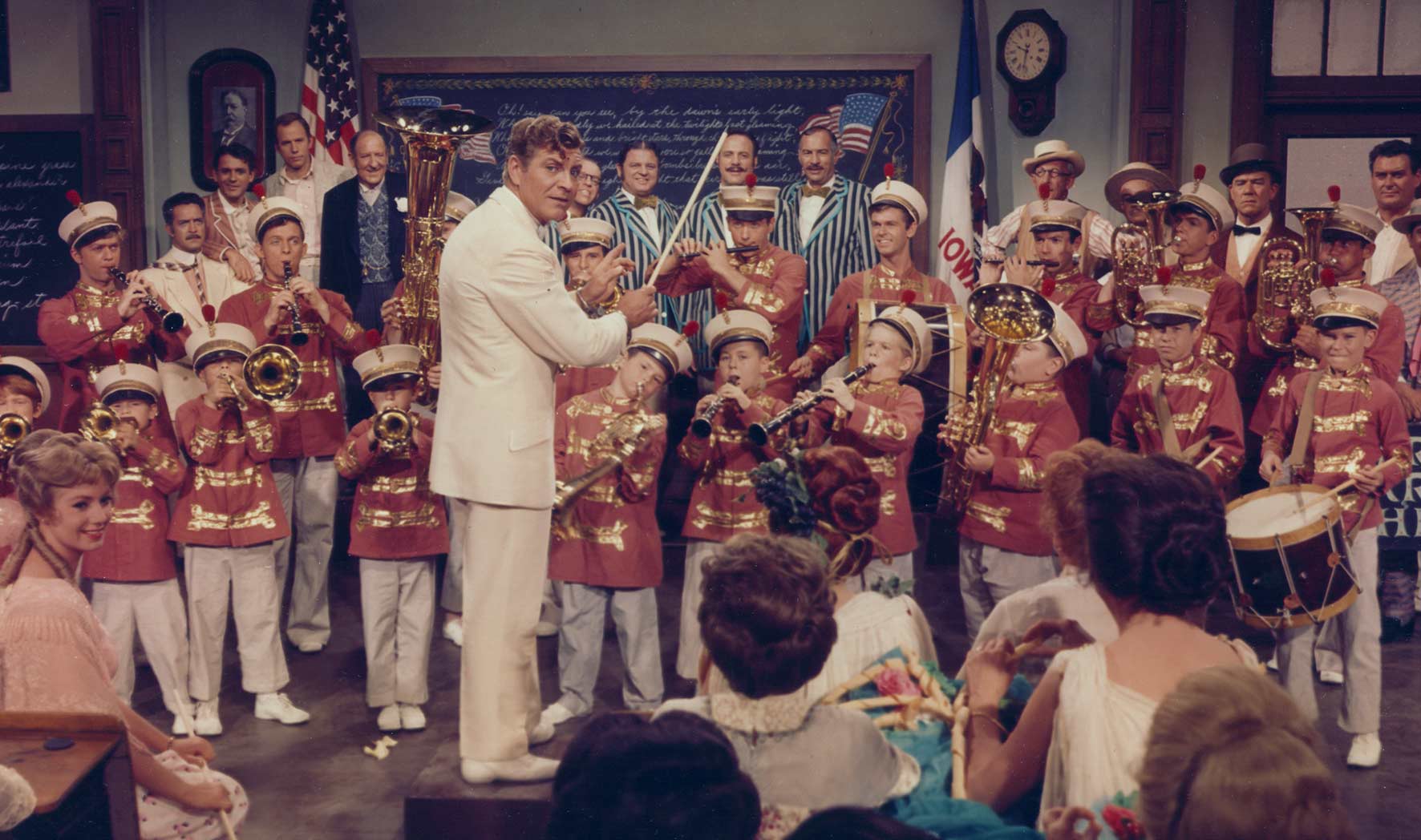
The Music Man (1962) | Columbus Association for the Performing Arts
Still from "The Music Man" (1962), starring Robert Preston
28. According to Lewis, Morey learned that "a big part of a consultant's job was to feign confidence" (28).

Can you think of any jobs in which feigning confidence is beneficial for positive results?

Do you think we should be thankful for people who "feign confidence" because, for example, they can inspire other people when results are unsure?  Or is feigning confidence a kind of deception that can lead to more problems?

Are there any professions in which a reluctance to feign confidence would be beneficial for everyone involved?

30. I Did It My Way

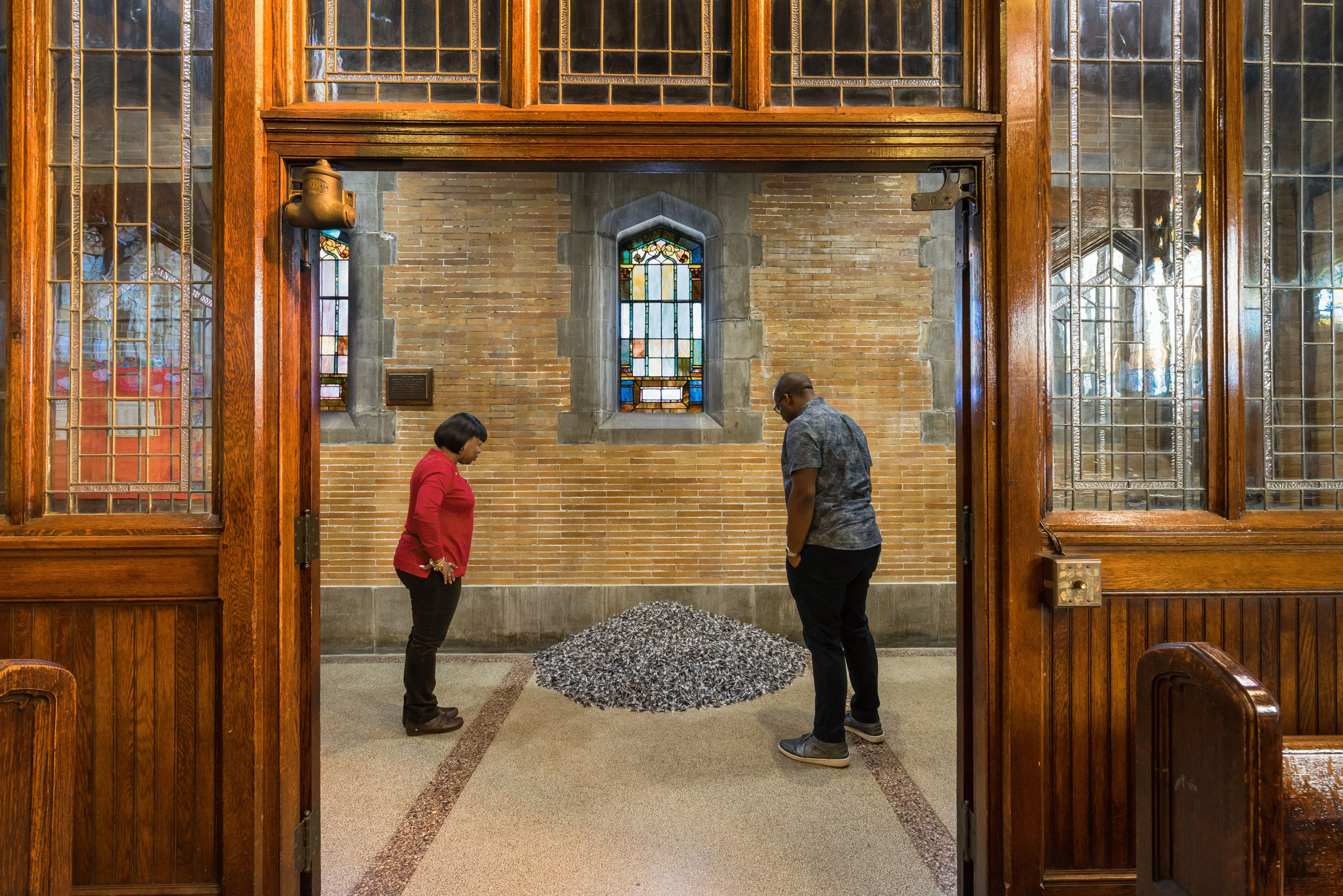
Felix Gonzalez-Torres, "Untitled" (Public Opinion), 1991. Black rod licorice candies individually wrapped in cellophane, endless supply, ideal weight: 700 lbs (317.5 kg), dimensions variable. Solomon R. Guggenheim Museum, New York, Purchased with funds contributed by the Louis and Bessie Adler Foundation, Inc., and the National Endowment for the Arts Museum Purchase Program 91.3969 © The Felix Gonzalez-Torres Foundation. Installation view: Lenka Clayton and Jon Rubin: . . . circle through New York, St. Philip's Church, New York, March 1–31, 2017. Photo: Kristopher McKay © Solomon R. Guggenheim Foundation
"Untitled (Public Opinion)" (1991) by Felix Gonzalez-Torres
30.  Morey describes Leslie Alexander's "indifference to public opinion" as a valuable character trait.  

Consider a profession you might be pursue after graduation from college.

To what extent might an "indifference to public opinion" be advantageous or disadvantageous in that job?  

Click here to learn more about the conceptual art project depicted in the image above.