 |
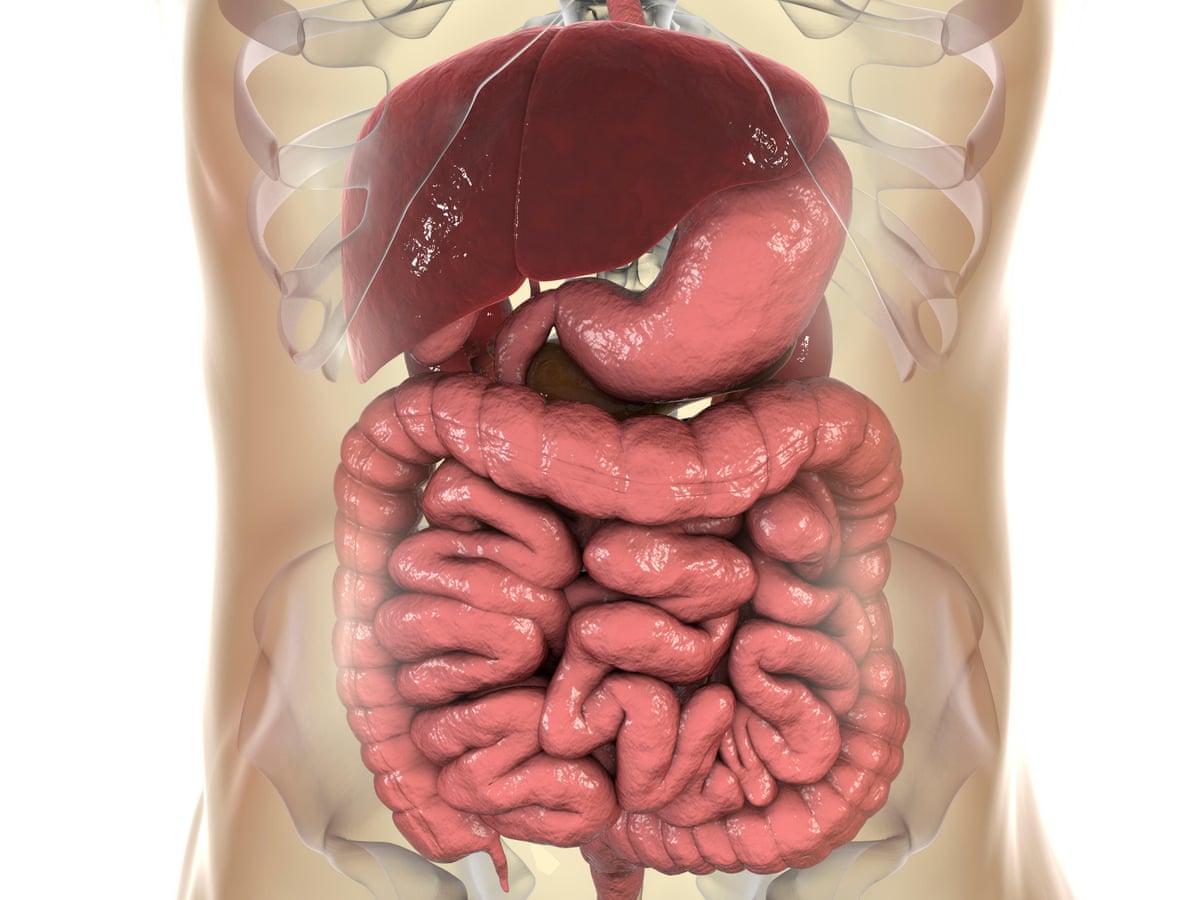
| "Human Intestines" |
83. Kahneman discovers that "gut feelings" are not reliable tools when it comes to evaluating someone's else's potential, and Lewis reports that Kahneman enjoyed greater success when he found a way to get people to ignore their gut feelings when they are trying to evaluate someone else's character.
In a more general sense, do you think society is better off when people rise above and/or disregard their gut feelings? Or is disregarding gut feelings dangerous? Are you someone who trusts your gut feelings? Or have you learned that gut feelings and first impressions can lead you to make mistakes?
Determining the usefulness of gut feelings is difficult because gut feelings are best developed through experience. Because of this, I believe the decision to consider or disregard one’s gut feeling should be dependent on the situation. In cases that involve new and unpredictable circumstances or forms, including human beings, I think gut feelings may be misleading. First impressions are a prime example of this, as we can greatly misjudge a person’s character from one interaction with him or her. Other than in these cases, our gut feelings may be beneficial, especially in situations we have experienced before. They may help us recognize certain signs or keep us from second guessing ourselves. Nevertheless, I believe we should not rely entirely on our gut feelings, but rather consider them in comparison to the logic of a situation. Personally, I do not generally trust my gut feelings; while I know their potential benefits, I still perceive logic and reason to be more reliable than intuition. However, this has sometimes caused me to overthink a situation in which my gut feeling was originally right. I am evidently still working on finding the right balance between the two!
ReplyDeleteBethany,
DeleteI find your post to be remarkably interesting, as it raises new questions outside the initial questions. Our ideas are similar in the sense that we both agree that gut feelings are a product of past experiences. We have different definition of what a gut feeling is. (which is wonderful!) From what I can draw form your post you perceive a gut feeling is the initial thought a person has when they first encounter the problem, their first impression. I define gut instincts as my intuition and my personal logic and reasoning. Regardless of whether we separate our personal logic and reasoning form what we consider gut feelings is trivial, but the fact remains that our gut feelings are influenced by our past experiences. Our past experiences are the foundation of our personal logic and reasoning. Our personal logic and reasoning, therefore, must influence our gut feelings unconsciously or otherwise. With that reasoning you trust your gut feelings more than you realize. Without it I do not trust my gut at all.
I am someone that generally trusts their gut. I live and work on a ranch caring for hundreds of head of livestock. Part of my job is making decisions that will ultimately improve the quality and wellbeing of the herd. I must trust my gut. I must choose a course of action and follow it through. Even though my gut is backed up by ten years of experience does not make it fool proof. I must acknowledge that following my gut has not always lead me to make the right decision. I will admit that I have made mistakes over the years, but those mistakes have given me the opportunity to grow. Notice I used the word “mistake” in place of “failure”. A mistake becomes a failure only if nothing is learned from it. In my experience choosing not to act at all, especially on issues concerning animal health, can be extremely costly. Hesitation can kill just as easily as any sickness or complication.
ReplyDeleteAs I have grown up and been training in self defense for over the past thirteen years of my life I have really trained to focus on my surroundings. It is a gut feeling or a sense of uneasiness that I get when I am in a situation that can lead to trouble, and for the most part I try to leave if I can but sometimes it does not happen. I try to take in the whole scene of something before I try to go to this feeling, but sometimes the way someone is talking or moving around catches my eye and I in turn try to make sure that I know where said person is. I for the most part am usually wrong in making these actions of keeping an eye on someone, as they are for the most part not going to do anything crazy to me or the group I am with, but it is something I do that makes me feel safer. I will probably not stop doing this though as I have trained to look for what can happen, and if it does how do I get out. My goal in life is to not judge someone or something, but I am not perfect and the instinct of something tends to make stand on edge, ready to take action whatever it may be. In part I like what Jordan said in that hesitation can be deadly, I never want to be in a spot of not knowing what to do or where to go, and if nothing happens that is great but if does I am ready to go.
ReplyDeleteAs a musician, gut feeling is a big part of my life, I have trained and trained for many years to get my voice and my mind where it is now. However, there are some times when gut feeling doesn't always determine the outcome of something. Gut feeling is based on experience and instincts of a person. If you have little experience with something, it's hard to trust your gut and go with what you think is best rather than going with someone who is older and more opinionated in the matter. So, on the conversation of whether or not disregarding gut feeling is dangerous, I think it really just depends on the situation the person is in and whether or not they have a lot of experience in those kinds of situations. I personally am one to trust my gut but I have also learned that there are times when my gut feeling isn't as strong as common logic and reasoning because of mistakes that I've made in the past.
ReplyDeleteI do think that gut feelings are beneficial at times. I am usually a person that trusts their gut. It's almost instinctual, and most of the time I am wrong about the feeling later on. These gut feelings have got me out of situations and at times put me into an even bigger situation. Like what many others have said above, experience is really the factor to determining whether or not a gut feeling should be trusted. New experiences should not be judged too quickly but if you have knowledge in something and a gut feeling arises, I would say to trust it.
ReplyDeleteAs a young woman, I rely heavily on my gut feeling in certain situations where I am vulnerable or alone. There have been plenty of times I've walked somewhere at night and got a bad feeling about something and turned around and there was either someone "following" me or maybe just acting suspicious. I get gut feelings about people sometimes too and i'll generally find out later on that my gut feeling was right. But there has been plenty of times my gut feeling has been wrong or clouded by prejudice. I know it's wrong but sometimes my gut feeling will get triggered by someone that i'm passing on the sidewalk who just looks like he gets in trouble and I make that assumption purely just off of how they look. I have been wrong plenty of times but I would rather trust my gut instinct most of the time than to ignore it and find myself in trouble just because I chose to ignore my subconscious feeling about a situation or person. individually, I think it is important that a person doesn't completely disregard their gut feeling, they don't have to listen to it every time but I think should at least consider it before brushing it off.
ReplyDeleteMakenzie, I am glad that you brought this up. I feel that women and other minorities are often mocked for being cautious. When hearing about our friend’s and family member’s experiences or having an encounter of our own it is like this wariness is instilled in you that cannot simply be turned off. I also sometimes feel guilty of my gut reactions but have decided that I would rather trust my gut feelings and be overly cautious rather than have something tragic occur.
DeleteRelying on your gut feeling is very hit or miss. Gut feelings come about based on your experiences and the outcome of the situations and are also based on your parents’ and peers’ experiences and lessons. Growing up my mom always knew things about situations and people before I did, she called it a mother’s intuition. I always trusted her gut feeling about someone, so in turn, I learned to mostly trust mine. Many of us were taught that creepy white vans are the cars kidnappers drive, so even many of us are almost twenty, every time we see a creepy white van we get that gut feeling that tells us to stay as far away from as possible.
ReplyDeleteThere many times as society where I think we are better off to ignore their gut feeling. An experiment performed in the 40s called “The Doll Test” showed that children were prejudice against any doll of color. The majority of the kids, regardless of their race, pointed to a doll of color for questions that asked which doll is a bad doll. The children were taught that people of color were “bad”, and this resulted in a gut feeling of not trusting people of color even into adulthood. This goes in correlation with the police brutality that is happening all across America.
- Emily Ford
I liked your example of “The Doll Test.” I remember learning this in my General Psychology class my freshman year… I sat there thinking “there’s no way I would have said that as a child,” yet (sadly) the data proves that most children correlate color to “bad.”
DeleteI have learned that gut feelings can be both reliable and unreliable. Gut feelings are based on your past experiences. You live and you learn along the way. I usually trust my gut when is comes to certain things but I do not trust it in others. I trust it when it tells me what to eat.:) I also trust it when it comes to people and first impressions. I should have trusted my gut more in the past. It would have saved me a lot of time and pain. However, I do not trust my gut when it comes to school or tests, I talk myself out of the right answer.
ReplyDeleteI would say I’m a naturally trusting and open person, I tend to try to see the best in people. I’m more likely to trust the initial positive gut feeling than that of a negative gut feeling. When I have a negative gut feeling I am more likely to question it; I think this has partially to do with a fear of being too quick to make an assumption. As humans we all have initial reactions to who we meet, I try my best to never judge a book by its cover. Either way, I am prone to making mistakes.
ReplyDelete—Kimber Farris
I am not sure that society is better off with gut feelings or not. I think that it differs from person to person. I believe I am someone who generally trusts their gut in situations. I believe that gut feelings are more reliable with more life experience. You live and learn from your experiences and decisions. I do not believe that my gut feelings and first impressions have led me to make mistakes.
ReplyDelete-Anna Herd
Gut Feelings
ReplyDeleteI think that society is worse off when people rely on gut feelings. People are unmistakably wrong when it comes to decision making. By unconsciously allowing our feelings and emotions to interfere with how we make decisions. Instead of relying on our guts we should use statistics to make important decisions.
I believe that society is better off when we rise above or disregard our gut feelings and rely less on instinct. Developing a reliance on gut and instinct can result in a bad habit of uninformed decision making. Though, this is only dangerous when applied to important decisions. For example, when I am taking a test I can rely on gut and instinct to make a guess on a question I do not know, or I can make an educated guess based on the length of the question, key terms, and or previously answered questions. Kahneman found that people or statistically more correct when we make educated decisions as opposed to making a gut or instinct-based decision.
In my personal experience I have found that using your gut to make decisions leads to many mistakes. If I use my gut when driving to a certain place it is inevitable that I will make a wrong turn; however, if I use a GPS or it is a route have been educated on I almost always get to my destination in a timely and prompt manner.
-Reese Siegle
Gut feelings should be followed on a case by case basis. Important decisions should rarely be decided by a gut feeling as they can be unreliable. Deciding your career path on gut instinct is probably not the best choice as that “instinct” could just be a result of whatever you had for lunch. However, there are some situations where following your gut can be justified. Personally, I follow my gut more when it’s on less important decisions.
ReplyDelete-Dixie Redman
Gut feelings can be a very difficult thing to analyze as far as their reliability. It has more to do with the life experiences that the person making a “gut” call has with the topic at hand. For example, if I am trying to learn what position to play in basketball and I have two people trying to give me advice based and what they think my skill set would best be used at. The first person is world renown Chef Gordon Ramsey and the other person is Michael Jordan. Naturally, I am going to trust Michael Jordan’s instinct over Gordon Ramsey as to what position I should play because he has an amazing basketball background, to say the least. Now, this logic can sometimes be applied when looking at social and economic occurrences in everyday life. Say for instance you have a very experienced stock analyst and he is trying to predict where to invest to maximize his stock return coming out of the most recent economic recession. If he has to make a quick decision as to where to invest it will be a very educated gut decision because he experienced and seen many things during his time as an analyst. However, there is the possibility that he overlooked a certain factor that he would’ve seen if he had taken the time to educate himself about the situation properly. On a personal level, I am a person who naturally trusts my first gut feeling and then adjust how my feelings/decisions as more information becomes available to adjust my opinion.
ReplyDeleteI tend to not trust my gut feelings about most things. If I am in a situation where I feel uncomfortable, I will probably try to leave. Otherwise I will usually try to ignore it and look for more fact based signs that something or someone is good or bad. You should never rely on your gut feeling alone. A combination of instinct and observation will usually help you the most when you have to make an important decision. I do not think it is a good idea to completely ignore your gut feelings. It is also not a good idea to completely trust them. You have to find the balance in order to make a sound decision.
ReplyDeleteI think that disregarding gut feelings can be extremely dangerous. As human beings, we are programmed to respond to certain stimuli, feelings, etc., in specific ways and when we ignore that, I truly believe it does much more harm than good. There are certainly times when our “gut instinct” may have a wrong response, but often these errors are few and far between-- making it a rather risky gamble to completely ignore our bodies responses and emotions regarding a situation. With all that being said, I can confidently say that I am someone who follows my gut instincts. I have learned that trusting my intuition has done more good in my life than ignoring it. Yes, there have been times where my responses to my instincts may have been too sensitive or paranoid, but for the most part, I have found that they have saved me from a potentially negative situation and environment.
ReplyDeleteI believe that gut feelings are very important. This phenomenon is credited to be the reason why some people make it through situations that could have ended very badly, such as death or injury. However, I don’t think it is necessarily correct all the time. Having a strong feeling towards a decision could be the result of many different factors and gut feelings isn’t something that can be proved exists. I personally trust my gut feeling as it has helped me a lot in the past, like when I decide at the last minute to bring extra cash in case the amount I had wasn’t enough. It doesn’t always have to be associated with life or death situations, but it shouldn’t be something to be trusted at all times and lead you to make what could be interpreted as mistakes. I don’t think society would be any better off if this feeling was tossed aside and forgotten. The feeling comes from our ancestors that would try and not get eaten while hiding in caves and there’s a reason that feeling exists. It just should not be used as a way to make decisions all the time. It’s okay to trust it every now and then.
ReplyDelete- Mindy Corbin
I do think that society as a whole would be better off if we were to disregard our gut feelings. In my opinion, a gut feeling is just bias. If possible, it is so much more beneficial to look for facts regarding the situation and use those facts to guide your decision-making process.
ReplyDeletePersonally, I over-think absolutely everything. By the time I get finished thinking it through, I’ve most like already forgotten my gut feeling and probably already came up with 800 other conclusions. Therefore, I applaud Morey’s system and I am glad that he found a good way to get to the point, and considers all of the facts.
I believe that gut feelings can be valuable at times so I don’t believe they can be completely disregarded. An example of this in my life was while attending a public event last year, a friend of mine informed me and my friend that they had met a new guy and was interested in them. While talking we recognized the guy and my friend said that they got “bad vibes” from them. A few months later, the friend who was interested in the boy came to school, saying that the boy had driven 2 hours unwarranted and entered her house without her knowledge. He had seen her location via SnapMaps and did not inform her she was coming.
ReplyDeleteHowever as a person who struggles with anxiety, my gut feeling is wrong 98% of the time because it’s usually very illogical. So while I personally do not trust my own, I believe that gut feelings should at the very least be considered.
When there is more studying and learning involved, we should trust our mind instead of our gut. We know what we know, but in some cases, gut instincts should be trusted. In social interactions and when dealing with human emotions, I believe gut feelings can lead people the right way. Gut feelings should not be used in interviews, though. Interviews are not a place for bias, and gut feelings often come from bias. While people can be swayed with charm, if the facts are laid straight in front of them and they try their best to focus on just the facts, they should be able to really tell someone’s character. My point in the question of the Dunning-Krugar effect stands with this question as well: human’s need to question themselves; it’s incredibly ignorant not to.
ReplyDeleteI am someone who trusts their gut feelings. Today women have to walk around almost everywhere, scared. I have read many stories of women who knew something was off and they turned around and someone would be following them. Trusting your gut is a very important tool we should all utilize. Even children know when something is off. Although gut feeling is important there are also times when you should not listen to the gut feeling. Like when meeting new people in college, sometimes your gut will be telling you not to be friends with them and in all reality it is just nerves. We cannot depend on gut feelings in all situations but it does play an important role.
ReplyDeleteMorgan Anderson
I trust my gut for first time encounters, and I have seldom found it to be wrong. Yet I am open to letting the actions of others change my first perception. Having said that, I do believe that as long as your gut is not the only thing you listen to, it is fine to listen. A vital part of humanity’s survival up to now has been being able to see things and make quick decisions. Any decision made without thought is one made based on a gut feeling.
ReplyDeleteGracie T.
I strongly believe that family circumstances correlate with a person’s character. Now don’t get me wrong, I do think there is always an exception to the rule, but as a general consensus I would say who you are or are not has everything to do with your environment as a child. This is based on my own opinion that we as humans are all inherently bad. None are good on their own, so when a child is in an environment that fosters to goodness and success, it is more likely for them to grow in that direction then it is for a child who is brought up in a poor environment. This teaches us tremendous things about the lasting effects of poverty, childhood trauma, and other difficulties children face. With this information we all have a responsibility to do whatever we can to protect our children. It is our duty as humans to stand up for those who can’t stand up for themselves.
ReplyDeleteIn most situations, trusting a gut feeling has been extremely beneficial. I have never been led in the wrong direction when “trusting my gut.” I do believe that first impressions can lead you astray, but that is why they are so crucial. As the saying goes, “You only have one chance to make a first impression.”
ReplyDelete-Darian Shaw